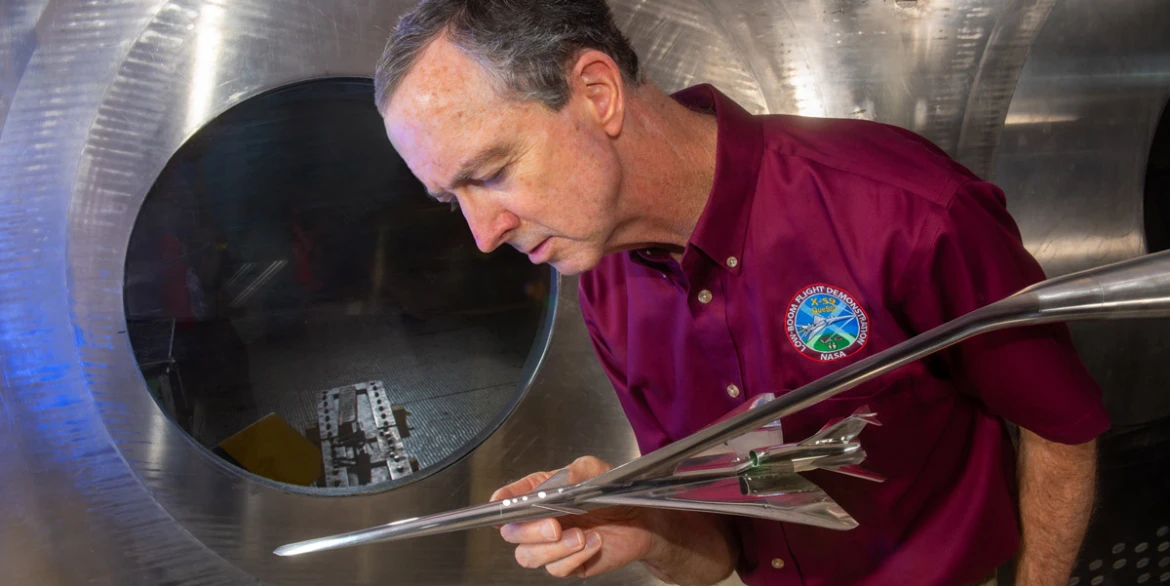
Don Durston does wind tunnel research for new quiet super-sonic aircraft designs such as the X 59. This design is used in the Quiet SuperSonic Technology (QueSST) program.
Research on how to achieve a quieter sonic boom
©NASA/Glenn Research Center/Quentin Schwinn
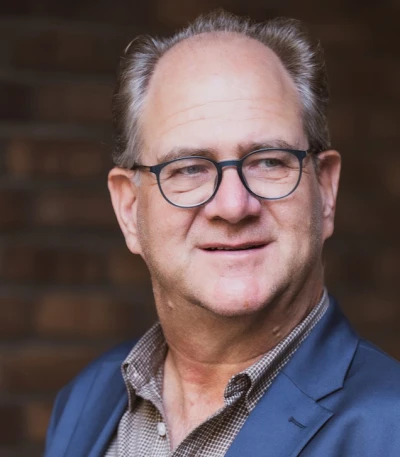
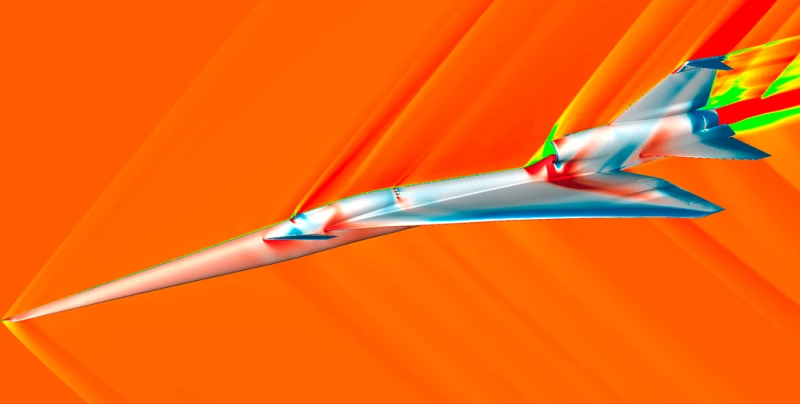
Don Durston, an aerospace engineer at NASA’s Ames Research Center in California, does wind tunnel research for new quiet supersonic aircraft designs such as the X‑59. This design is used in the Quiet SuperSonic Technology (QueSST) program, scheduled to start its test campaign in 2023. The program aims to bring the sonic boom in supersonic flight down to such a low level that it becomes acceptable to fly over land. The X-59 is specifically designed to produce a quieter sonic “thump” instead of a boom. One major feature in achieving this is its extremely long nose, which dampens the forward shock wave.
AEROREPORT: Making supersonic aircraft quieter—is that a new objective NASA is pursuing with the QueSST program?
Don Durston: Not at all. NASA has been working on this since the 1950s, ever since we learned from Chuck Yeager’s flight that booms are loud. In 1964, the U.S. government ran an experiment in Oklahoma City where they bombarded the city with sonic booms eight times a day for six months. It drove people crazy! NASA, the FAA and the Air Force have been working on this for a very long time.

©Lockheed Martin
©Lockheed Martin
©Lockheed Martin
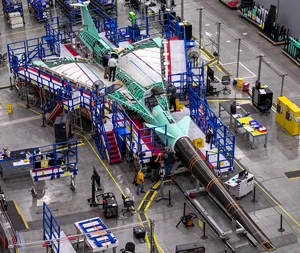
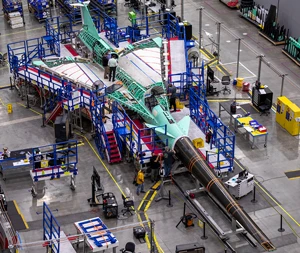
Low-boom test aircraft: Lockheed Martin began building the X-59 in 2018. In this image, the nose is being positioned at the front of the aircraft.
AEROREPORT: How did the design of the X-59 evolve over time?
Durston: In 2009, our supersonic project put out contracts with Boeing and Lockheed Martin to design low-boom airliners. They didn’t achieve the low boom levels of 75 decibels we try to achieve with the X-59, they were somewhat above that, but it was still progress. They kept on working on their concepts and both presented their designs for a low‑boom flight demonstrator to NASA in 2016, and we chose Lockheed Martin. They refined the design in several iterations since then, and in November 2018, Lockheed Martin started to build that airframe. We’ve learned some more things since then, but those will have to be applied to later designs.
AEROREPORT: How confident are you that the X-59 will actually achieve the low noise results in reality that it does in computer simulations?
Durston: For some test points I’m confident. We’re going to fly the aircraft over various communities in hot weather conditions and cold, humid and dry. I think for some of those conditions, the boom may be a little bit louder and for others a little bit quieter. We have four different lifting devices in the aircraft and can adjust three of them; that might result in a boom that is slightly louder or quieter. Our teams are already calculating that.
©Lockheed Martin
©Lockheed Martin
©Lockheed Martin
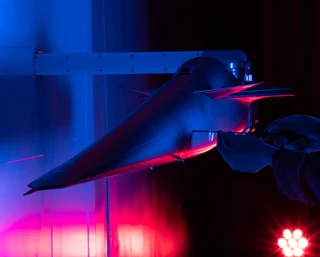
Tests before the maiden flight: Numerous tests are carried out to ensure a safe first flight. Some of them involve analyzing data on the X-59 flight control system collected in low-speed wind tunnel tests.
©NASA
©NASA
©NASA
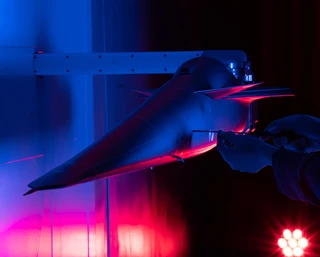
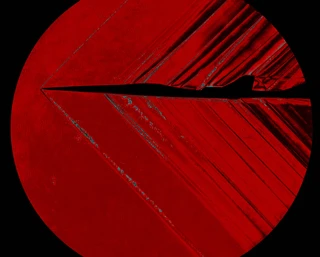
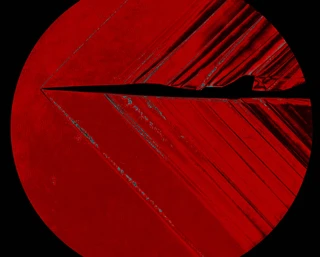
Wind tunnel testing: This colorized schlieren image shows a small model of NASA’s X-59 aircraft featuring Quiet SuperSonic Technology.
AEROREPORT: But the most crucial outcome, one that you can’t simulate, will be the reaction of the public subjected to the noise of the overflying aircraft.
Durston: Exactly, we want to hear it from the people. There is a long list of potential communities for this, as we need a variety of climate zones as well as a mix of urban areas. Ultimately, testing will be done in four to six communities around the U.S. Each flight test campaign will take several months. There’s a lot of logistics involved: we need all the support equipment, the maintenance staff, we need a chase plane, probably an F-15 or F-18, etc. The X-59 will likely operate out of military bases, but you have to make sure that there are other airports nearby with long runways where it could land in an emergency. And we have to look at the data of one test campaign and decide then if we maybe want to do the next one a bit differently. It all takes time, probably several weeks per community.
AEROREPORT: Do you expect a new supersonic era with quieter aircraft to begin soon?
Durston: We are likely to enter a phase where we will get a boom quiet enough that we can start to build some supersonic airliners to fly over land. But then the question arises: What happens if we get hundreds of supersonic airliners going across the country? Even if the sound from one airplane may be quiet enough, will it bother people if there are hundreds of those per day? That can be a challenge.
The Quiet Crew: NASA’s QueSST mission aims to develop a research aircraft with technology that will dramatically reduce the noise of sonic booms. Aeronautical engineer Don Durston is doing research on this in the wind tunnel.