Top professionals in the aviation industry can enhance their international teamwork skills through the European Consortium for Advanced Training in Aerospace program.
ECATA: Intensive training and networking for young managers
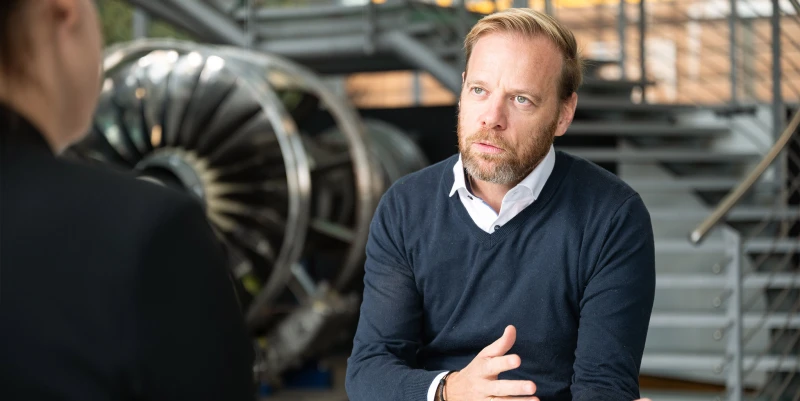
Madrid, Cranfield, Toulouse: for some, a rich and varied city trip across Europe; for Markus Becker, three stops during intensive management training spanning a total of eleven weeks. The MTU team leader for central military processes, which include repair forecasting and component cost management, was one of twenty-one young professionals from eight countries who took part in the ECATA program in 2022.
ECATA stands for European Consortium for Advanced Training in Aerospace, an affiliation of seven European universities and eight aviation companies, including MTU Aero Engines. For the past 30 years, in addition to offering first-class support to young talent, ECATA’s main focus has been active networking for highly qualified managers.
This year’s activities kicked off in Madrid: “The workload was demanding from day one,” Becker recalls, “with back-to-back lectures, seminars and workshops from first thing in the morning until late afternoon.” At these sessions, science and industry experts share their knowledge and insights about all manner of aviation topics.
About ECATA

For the past 30 years, the European Consortium for Advanced Training in Aerospace (ECATA) has been offering outstanding support and international networking opportunities to highly qualified young managers. Its lectures and seminars focus on the international aerospace arena, system integration, technology and multinational program management. Participants also take part in a multinational team project that helps sharpen their skills in teambuilding and intercultural/international collaboration. Each year’s training program is hosted by three universities in different countries between January and April. Seven European universities and eight aerospace companies are involved in ECATA.
Watch this year’s ECATA webinar on Sustainable Aviation, Pathways for a Greener Tomorrow here.
Multinational team project
But that’s not all. The ECATA program also features a multinational team project designed to sharpen these top professionals’ skills in project management, international teamwork, and leadership. “Throughout the program, this project often had us working together late into the night,” Becker says. “It was absolutely fascinating to experience the different corporate cultures in terms of how people collaborate, communicate and lead.”
The project task could hardly have been more topical or more pressing, as it concerned the European aviation industry’s efforts to develop paths and strategies that will make flying sustainable by 2050. The focus was on two main topics: first, the energy-intensity and thereby the efficiency of aircraft and engine design as well as improved operational processes at airports and for air traffic management systems; second, the transition to more eco-friendly propulsion systems, fuels like sustainable aviation fuel (SAF) and liquid hydrogen as well as electric and hybrid drives.
Complex issue, serious time pressure
Becker outlines the challenge: “We were given free rein as to how to tackle the project work. That means we first had to decide how we wanted to approach the complex topic and set sensible parameters. I’m sure that the sheer scope of the project task was deliberate. That way, we had to step up our game to meet the challenge—both individually and as a team.” The multinational team project was initiated and supervised by a customer team comprising experts from the participating companies and universities.
“Almost right away, we noticed that we worked most efficiently in small groups,” Becker says. The members of the team came from a wide variety of disciplines, including systems engineering, IT, and project management—some commercial, others military. “I was impressed at how a newly formed team could work together to achieve a common goal—under serious time pressure, with terrific commitment and regardless of cultural or corporate affiliation.”
After Madrid, the team moved on to Cranfield, England. The village itself proved to be charmingly modest and the hotel for the ECATA trainees was snug and cozy. Meanwhile, the work atmosphere had become more intense. “This noticeably strengthened our identity as group members,” Becker says. In addition to working on their team project, this phase also had the participants create a webinar to present the fundamental questions of sustainability: How much energy will be required to electrify aviation by 2050? How can we produce enough “green” hydrogen? When will various technologies have to come to market?
After Cranfield, it was on to Toulouse for the home stretch: this is where the trainees rounded off their team project by finalizing their 150-page technical report entitled Sustainable Aviation, Pathways for a Greener Tomorrow. One of Becker’s many takeaways from the ECATA program: “What the training did for me was show that not only can I lead larger teams, but that this is something I enjoy doing.” Another takeaway: “For a project on this scale, teambuilding is everything. Success hinges on creating a cohesive working atmosphere in which everyone can contribute their strengths and expertise.”
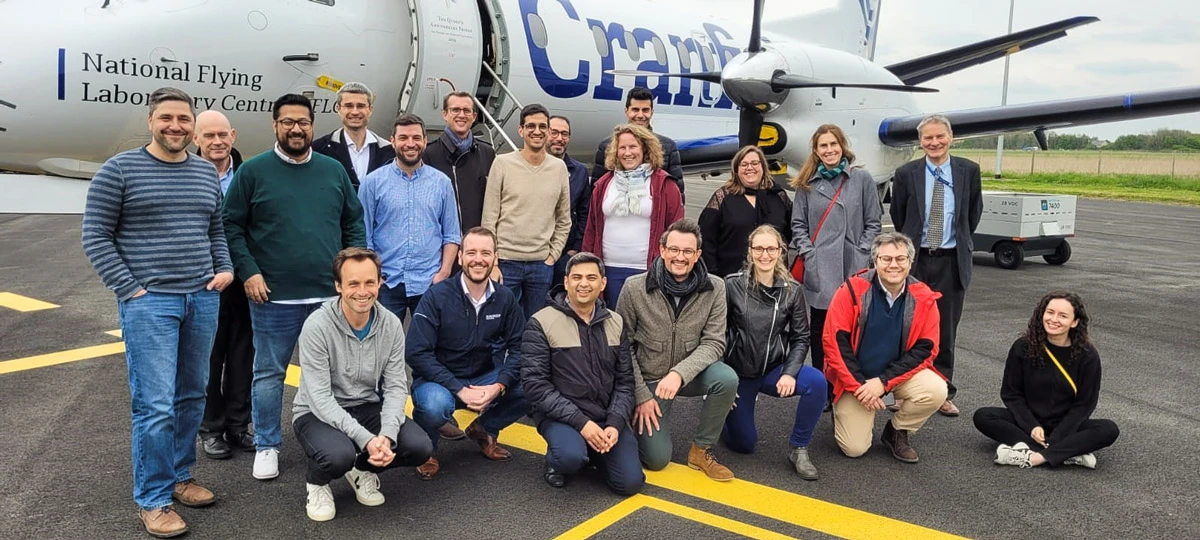
ECATA: The European Consortium for Advanced Training in Aerospace offers first-class support and active networking for young talent – including from MTU.
Collaborating across company lines
MTU has been involved in ECATA since two years after the program was launched. The company’s first participant was Michael Schreyögg, who is now MTU’s Chief Program Officer. Former participants also went on to establish the ECATA Alumni Association (ECALAS), a European network. André Sinanian, Managing Director of MTU Maintenance Berlin-Brandenburg, represents MTU on the ECATA Supervisory Board, the program’s highest governing body. “MTU sends young managers to participate in the training every year because we believe that it will allow them to develop the skills they need to lead a team through an international aviation project involving multiple partners. It also helps them network within the industry on an international level,” Sinanian says.
Antoine Peugnet, Senior Program Manager IT Environment FCAS at MTU, completed his ECATA training in 2021 and is now a member of the ECATA Management Board: “MTU develops commercial and military engine programs as part of international collaborations. A good example is the European Future Combat Air System project that I’m working on. Together with Safran Aircraft Engines and the Spanish engine and component manufacturer ITP Aero, MTU is developing, producing and providing support for the system. It’s especially important for MTU’s young managers to learn the right way to establish a multinational collaboration and how the partners can work efficiently together across company lines.”
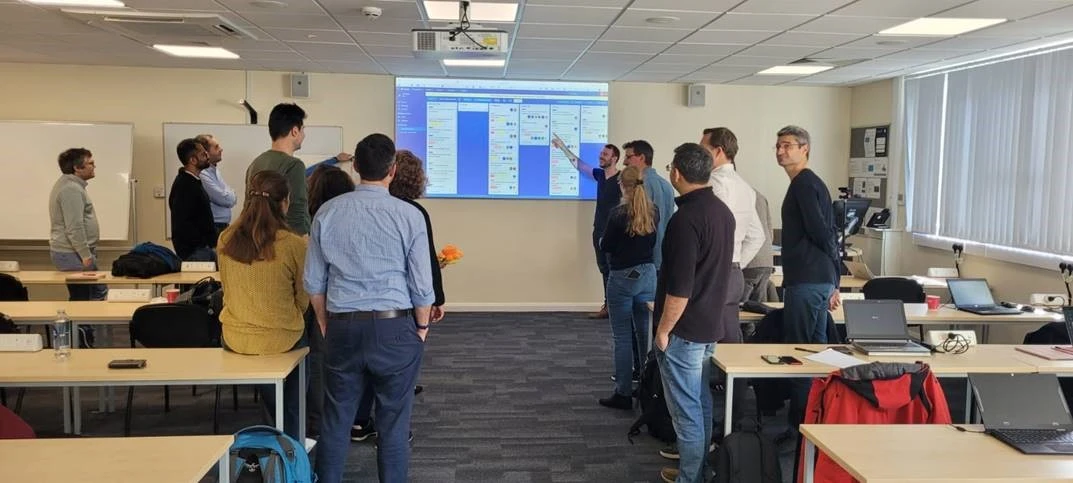
Multinational team project: Twenty-one young professionals from eight countries took part in the ECATA program in 2022.
International network
Ultimately, ECATA is about combining different goals, corporate cultures and stakeholder interests in pursuit of shared success. “Personally, I continue to benefit from my experience with the program and I apply it in my role at MTU,” Peugnet says. ECATA offers active networking, he says, and not just for the participants, who keep in touch as members of ECALAS: “The ECATA customer team also constitutes an international network.”
MTU expert Barnaby Law wholeheartedly agrees. The Chief Engineer Flying Fuel Cell joined the ECATA program’s customer team in 2022. “I seized the opportunity to make new contacts,” Law says. “This is also a hallmark of the ECATA program: the customer team is made up of outstanding specialists and managers.”
Law is impressed by the results of the team project, too—not just on paper, but also by the commitment shown by the young managers in tackling the topic. “In the customer team, we focused mainly on the strategic aspects,” Law says. What new technologies are needed? What impact will these have on the aviation industry? And how can the sector benefit from them going forward?
The results of this year’s training will be presented at the AIAA SciTech Forum and Exposition in Chicago in January 2023. Early 2023 will see the start of the next ECATA training group, which will include two young MTU managers this time.