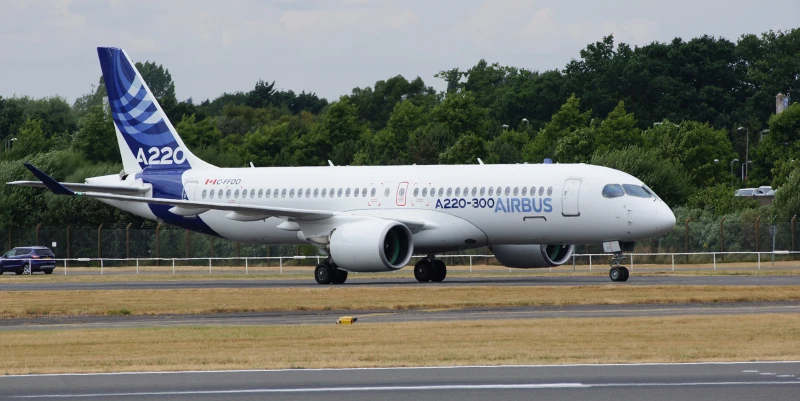
As the world’s first airline with an all-Airbus A220 fleet, airBaltic is better off than others in times of crisis. Innovation is a hallmark of the Riga-based airline.
Flying high over the Baltic
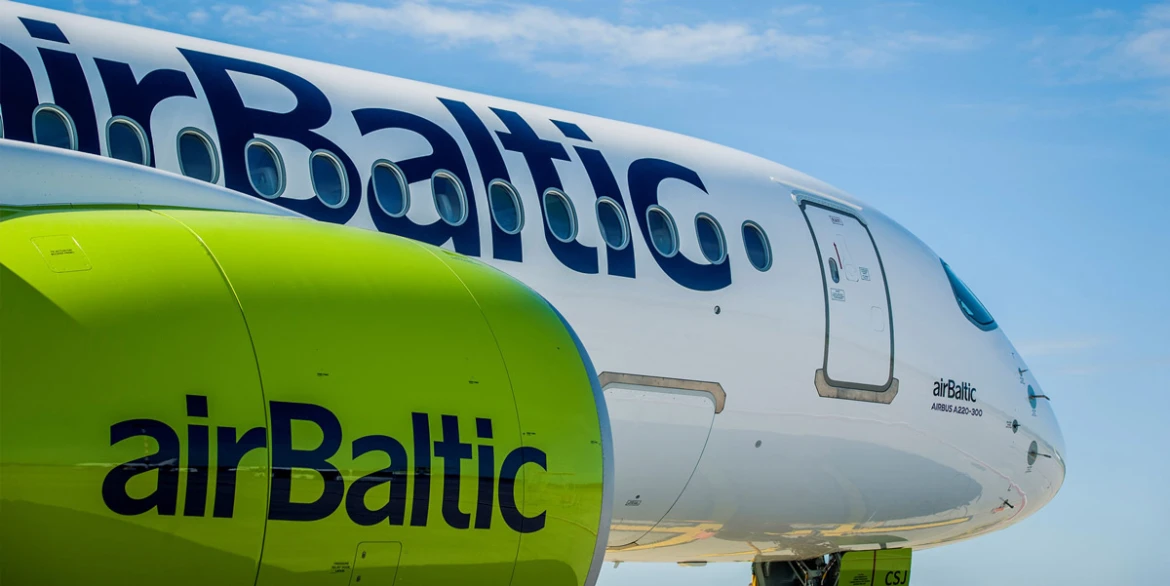
©Andreas Spaeth
Among the world’s airlines, airBaltic has a unique selling point: the head of the company sometimes flies passengers personally—probably the only CEO of a major airline to do so. Martin Gauss is a pilot by training and used to fly the Boeing 737-300. And in the middle of the pandemic, of all things, he reached another personal milestone by earning his type rating as an Airbus A220 captain. “I already have almost a hundred flight hours on the A220, all of them under the supervision of a check pilot,” Gauss explains. Depending on the schedule, he completes a rotation on the airBaltic route network once or twice a month. To complete the remaining hours he needs to keep his license, he uses the company’s own simulator.
Less traffic, high punctuality
“Home of airBaltic” is written in big black letters on the roof of the airline’s administrative building at Riga Airport. In recent years, airBaltic has become the market leader in the three Baltic states, a region home to a good six million people. The airline understandably projects a healthy amount of self-confidence. Under the sign is a wall of windows, behind which stands Pauls Cālītis, the airline’s chief operations officer and also a pilot. Large screens on the wall list every flight of the day with all the important data—including the current passenger numbers, which have returned to a somewhat more encouraging level. But even in late summer 2021, everything is far from back to normal. Capacity utilization on recent flights offered was 67 percent, still much lower than was usual before the start of the coronavirus pandemic. Cālītis smiles as he reports the airline’s high punctuality rate of well over 90 percent. “These are world-class figures that we normally never see in the summer, but the reason is simple: there’s a lot less traffic in the sky.”
“In love with airline and country”
The words on airBaltic’s building are also fitting for Gauss, because Riga and Latvia have become home to the airline’s CEO. The 53-year-old German started his aviation career in 1992 as a co-pilot on the Boeing 737-300 at Deutsche BA in Munich, where he later became a managing director. He then led Cirrus Airlines and Malév before becoming head of airBaltic in November 2011. “I completely fell in love with this airline and this country. This is my home, and that’s what motivates me. I have a strong team who helped us get through the crisis,” he says.
Right at the beginning of the crisis, airBaltic did pretty much everything differently than other airlines. “At that time, we locked ourselves in here at headquarters,” Gauss recalls. “We had to develop a new strategy and a product that would be acceptable to passengers after the crisis. Initially, we of course had doubts about whether we would survive,” he admits. Fortunately, airBaltic had large cash reserves (which the airline is still drawing on), plus a total of 340 million euros in capital increase from the Latvian government.
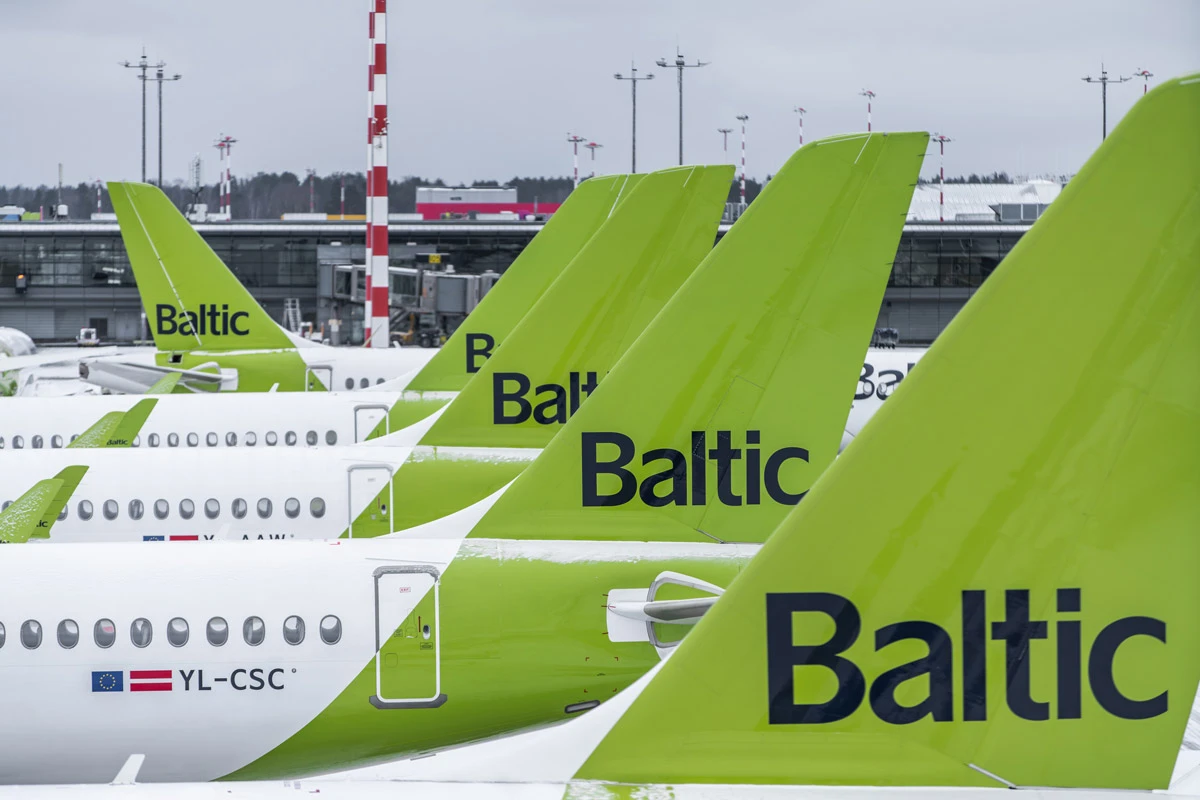
©Andreas Spaeth
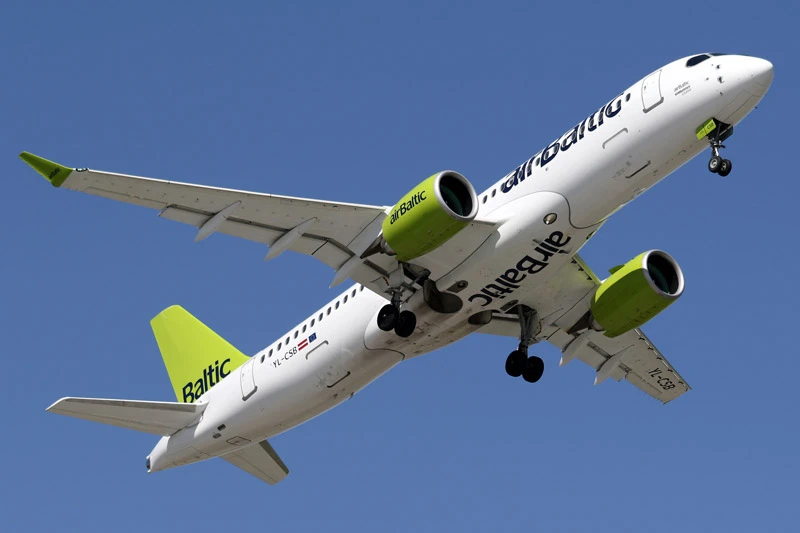
airBaltic: The airline is the world’s only operator of an all-A220 fleet and the airline with the most A220-300s
In March 2020, flight operations were completely suspended for two months, so radical cuts were necessary. The airline was downsized by 40 percent—almost 700 employees had to go, but all with a guarantee of reemployment when business picked up again. Some are already back. The fleet was also downsized and the three aircraft types whittled down to one. Here, airBaltic benefited from the fact that back in 2012, it had already decided to rely heavily on what was then the Bombardier CSeries. The company ordered up to 20 of the aircraft in its extended version, now called the Airbus A220-300. Today, there are 50 firm orders from the Baltic on the books, with a total of 32 aircraft delivered by September 2021 and eight more to follow in 2022. All 50 A220s on order will have arrived in Riga by 2024. “Since the coronavirus pandemic, it’s become apparent that a 145-seat aircraft is just the right size, as this capacity is now suitable for a great many routes on which larger aircraft used to fly,” Gauss says. “The crisis has accelerated our move to an all-A220 fleet. We’ve now accomplished what wasn’t supposed to have happened until 2023.”
The youngest fleet in the world
airBaltic now has the youngest fleet in the world, with an average age of 1.9 years. That is set to go down still further as more A220s are added. airBaltic is also the world’s only operator of an all-A220 fleet and the airline with the most A220-300s. These serve its route network from all three Baltic capitals. The airline already operates its own A220 simulator and preparations are underway to build the region’s largest hangar as a new maintenance center. “It will accommodate up to seven A220s. We’ll then carry out all maintenance ourselves, apart from the engines, and we’ll be the only airline to perform the C check for this aircraft type. In the future, we intend to offer this service to third-party customers as well,” Gauss says.
airBaltic and the Airbus A220 have a special symbiotic relationship. The airline has always believed that this aircraft would show its advantages in a crisis, because it can be used on short-haul as well as long-haul routes. “We’re already seeing that works. Take our new longest routes, for example. As of fall 2021, we fly from Riga to Tenerife and to Dubai, with each route taking around six hours,” Cālītis explains.

©Andreas Spaeth
“Climate action will remain the big issue. We want to be a pioneer in this area and in this respect, the A220 is just the type of aircraft we need. The engine is already exceeding our expectations. Its performance and savings in fuel consumption and CO2 are higher than we thought.”
Martin Gauss
CEO Air Baltic

©Andreas Spaeth
©Andreas Spaeth
©Andreas Spaeth
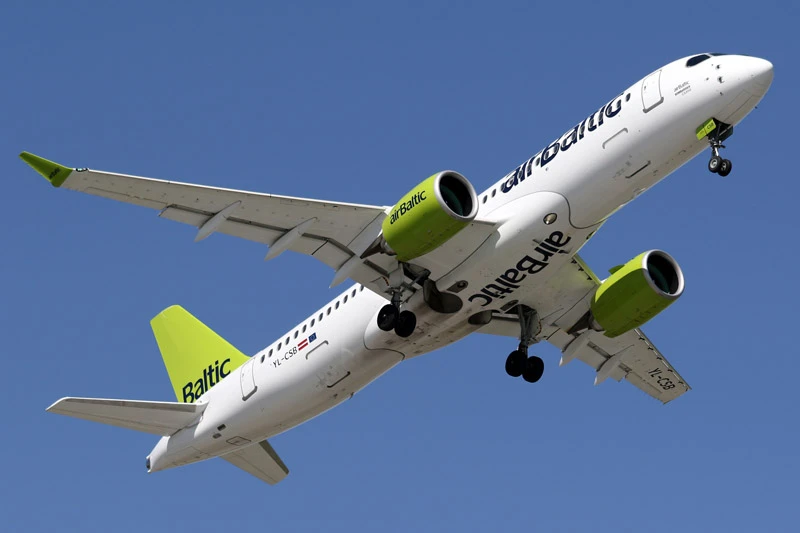
GTF™ engine family: The new engines offer double-digit percentage reductions in fuel consumption, pollution and noise emissions as well as operating costs.
Becoming a green airline
From the outside, airBaltic’s corporate colors already make it a “green” airline—but as an airline based amid the stunning natural beauty of the Baltics, sustainability is an important concern as well. “Climate action will remain the big issue. We want to be a pioneer in this area,” Gauss explains, “and in this respect, the A220 is just the type of aircraft we need.” As a CEO with his own experience in the cockpit, he is in a better position than almost anyone else to get an idea of the performance of the new PW1500G, the member of the Pratt & Whitney GTF™ engine family that powers the A220. “The engine is already exceeding our expectations. Its performance and savings in fuel consumption and CO2 are higher than we thought. And the technology will get even better,” Gauss says. In addition, 6 percent of the kerosene consumed by airBaltic already consists of sustainable aviation fuels (SAF).
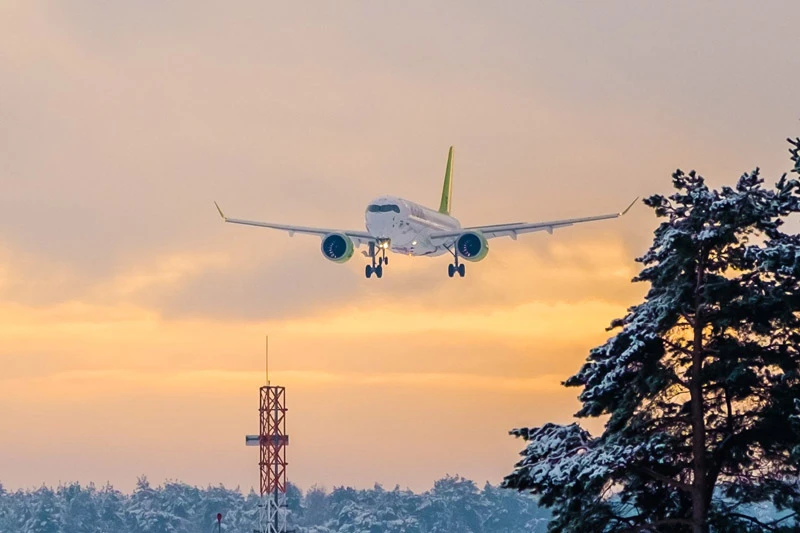
At any rate, the view from Riga is that they are in a strong position, even in difficult times: “It’s clear that aviation is making a comeback,” Gauss says. “We’re happy with the current development and expect around 2 million passengers in 2021. That follows the 1.34 million we had in 2020 and 5 million in 2019.” And Cālītis is already arranging the next flights to collect the new A220s from Montreal. Five additional jets will arrive in the Baltic in the fall of 2021 alone. One of them will be brought across the Atlantic by Gauss himself—a special treat for him, too.
©Andreas Spaeth